
Merchant Services for Medical Offices: A Case Study in Financial Health
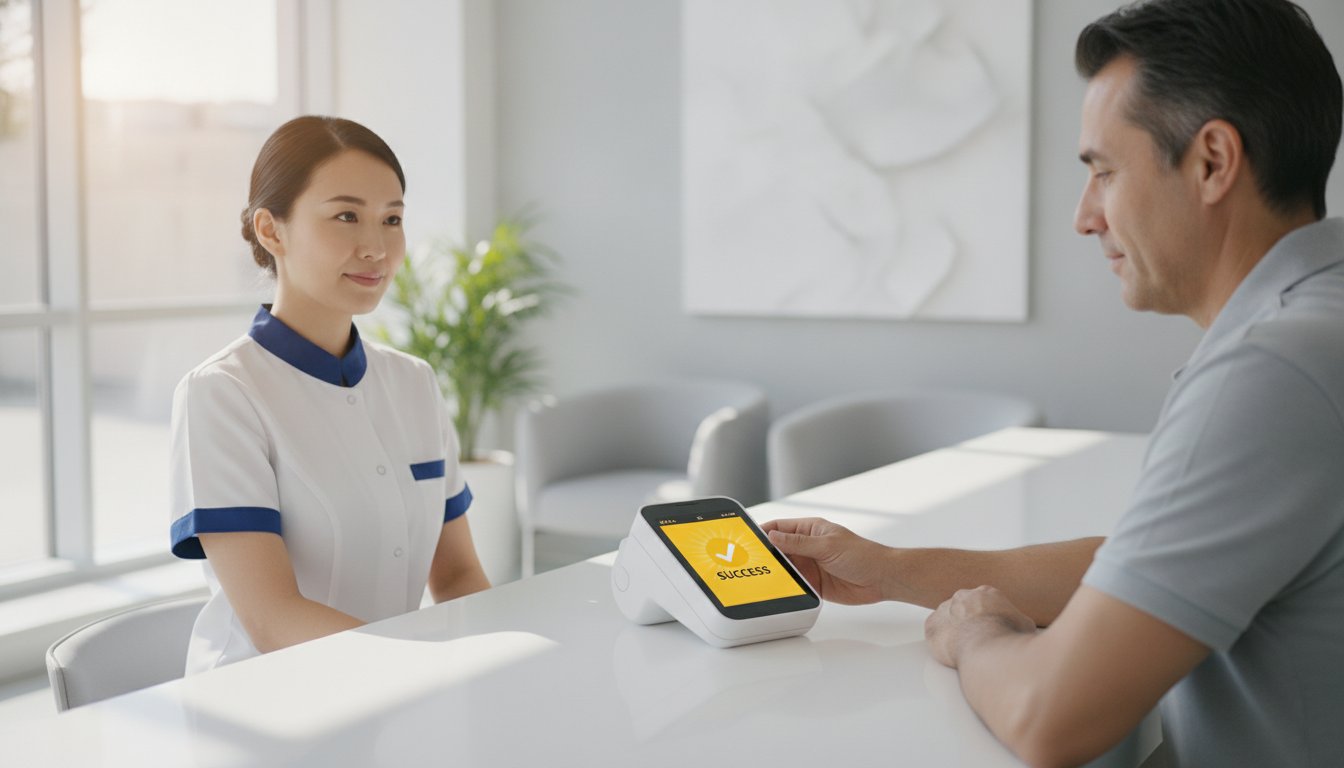
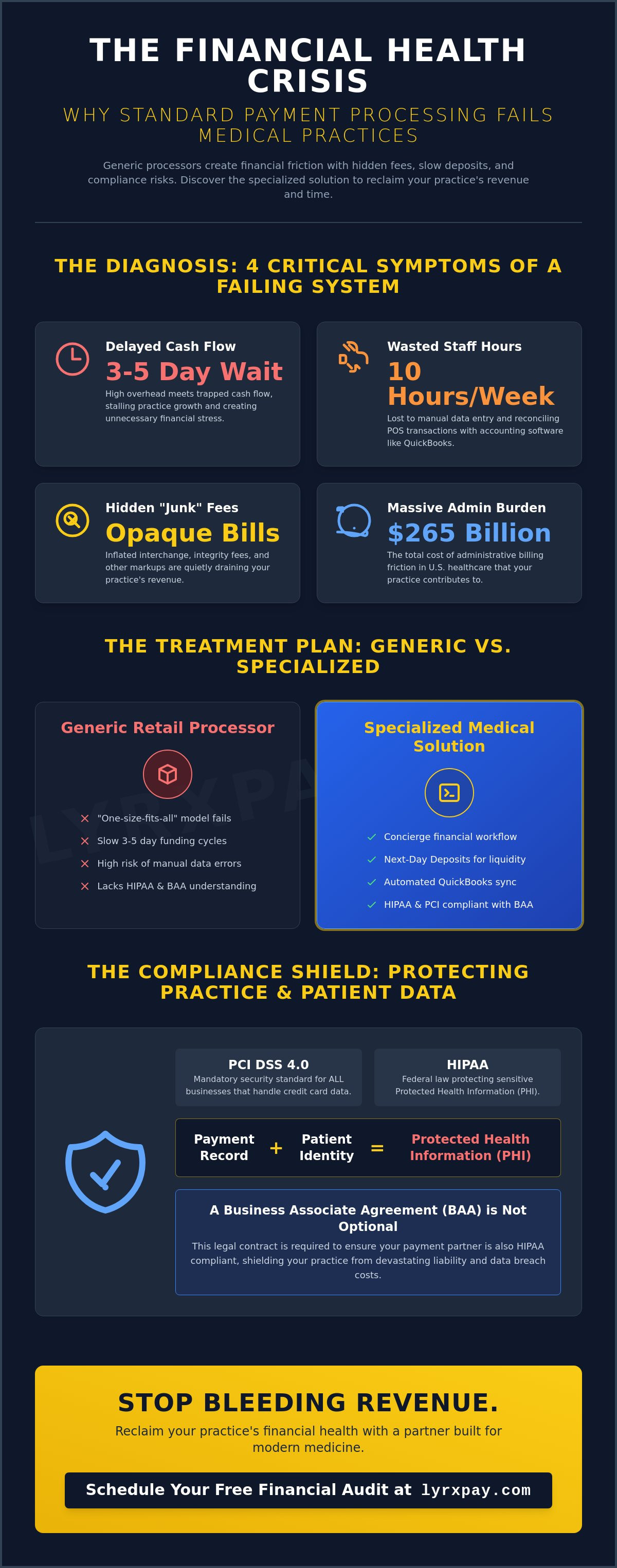
Why is your medical practice waiting five days for funds that patients paid on Monday? It's frustrating to manage high overhead when your cash flow is trapped in a processing cycle. You've likely spent hours squinting at opaque merchant statements, trying to decipher hidden "junk" fees that feel more like a tax than a service. We agree that merchant services for medical offices should be a concierge financial workflow, not just a credit card swipe. With the administrative billing burden in U.S. healthcare reaching $265 billion, your practice can't afford to lose time or money to manual data entry errors between your POS and accounting software.
This article promises to show you how medical practices are reclaiming their financial health by eliminating hidden costs and automating patient billing with integrated systems. You'll discover the path to next-day deposits and seamless QuickBooks integration for one-click reconciliation. We'll preview the specific strategies used to achieve transparent, lower transaction fees while maintaining strict compliance with the latest standards. It's time to stop the manual reconciliation and start focusing on what you do best: caring for your patients.
Key Takeaways
- Learn why generic retail processors often fail to meet the unique workflow and security requirements of a modern medical practice.
- Understand the critical link between PCI compliance and HIPAA to ensure your patient data stays protected during every transaction.
- Discover how a specialized approach to merchant services for medical offices can save your staff up to 10 hours a week on manual data entry.
- Identify the simple steps to audit your current merchant statements for hidden markups that are quietly draining your practice revenue.
- Find out how to secure a Business Associate Agreement (BAA) to shield your practice from liability and maintain regulatory compliance.
The Prescription for Practice Profitability: Why Medical Merchant Services Matter
Financial health isn't just about the number of patients in your waiting room; it's about the efficiency of the revenue cycle that keeps your doors open. In 2026, medical practices are increasingly measured by their ability to convert care into capital without losing a significant percentage to administrative friction. Specialized merchant services for medical offices represent an ecosystem designed to handle the nuances of healthcare payments, from upfront co-pays to complex insurance reimbursements. Unlike a standard payment processor found in a retail setting, these systems must bridge the gap between clinical care and financial reconciliation.
Standard retail processors often fail because they treat every transaction with a one-size-fits-all approach. In a medical office, where high-volume transactions meet high-overhead costs, those generic rates quickly become a liability. Financial health is now a primary metric for practice success, requiring a proactive stance on how money enters and moves through your business. It's about creating a frictionless path from the patient's wallet to your bank account while ensuring every cent is accounted for without manual intervention.
The Hidden Cost of "Standard" Processing
Many office managers are surprised to find that their seemingly low teaser rate is actually padded with complex markups. These often appear as "junk" fees on your monthly statements, labeled as integrity fees, batch headers, or inflated interchange adjustments. We take the role of a defender of your resources, performing line-by-line audits to reveal where your money is leaking. It's not just about saving a few cents on a swipe; it's about protecting the margin that allows for better patient care and staff retention. If you want to dive deeper into reclaiming your revenue, our strategic guide to lowering merchant fees offers a roadmap for auditing your existing rates.
Beyond the Swipe: The Integrated Workflow
Payment processing is only about 30% of the administrative battle. The real challenge lies in what happens after the card is charged. If your staff is manually entering data into accounting software or chasing 3-5 day deposit cycles, your workflow is broken. Specialized merchant services for medical offices integrate directly with your point-of-sale and bookkeeping systems. This connection eliminates the human error factor that often leads to hours of reconciliation at the end of the month.
Modern patient billing also requires secure ACH processing for larger balances or recurring wellness plans. This offers a lower-cost alternative to traditional credit cards while maintaining a professional, secure experience for the patient. Additionally, next-day deposits solve the liquidity crunch that many high-overhead practices face. By ensuring the funds you earned yesterday are available to pay your bills today, you can maintain a steady, predictable cash flow that supports long-term growth.
Security and Compliance: Navigating HIPAA in Payment Processing
Compliance is often viewed as a hurdle, but in a medical setting, it's the foundation of patient trust. While every business must adhere to PCI DSS 4.0 standards, healthcare providers face the additional layer of HIPAA regulations. The challenge lies in the overlap; a payment record becomes Protected Health Information (PHI) the moment it's linked to a patient's identity or treatment type. Specialized merchant services for medical offices bridge this gap by ensuring that financial data and clinical privacy don't exist in silos. By using a system that understands both worlds, you protect your practice from the devastating reputational and financial costs of a data breach.
Secure ACH processing plays a vital role in this protective shell. By moving funds directly from bank to bank, you bypass the traditional card networks, which can reduce the "attack surface" for potential hackers. This is particularly effective for high-balance procedures where security is as much of a priority as the transaction cost. Our concierge support model ensures you aren't left to figure out these complexities alone. We act as an advocate, helping you implement the right protocols so you can focus on patient care. If you're concerned about your current security posture, you can explore our compliant payment solutions to see how we simplify the process.
Patient Data Protection Standards
Modern merchant services for medical offices rely heavily on Point-to-Point Encryption (P2PE). This technology ensures that patient data is encrypted the instant a card touches the POS hardware, remaining unreadable until it reaches the secure processor. For offices that manage recurring co-pays or wellness plans, "Card-on-File" systems must utilize tokenization. This replaces sensitive card data with a unique identifier, allowing you to bill patients without actually storing their financial information on-site. For 2026 compliance, a Business Associate Agreement (BAA) is a legally binding contract that ensures a service provider appropriately safeguards Protected Health Information (PHI) while performing functions on behalf of a covered entity.
ACH vs. Credit Card: A Multi-Modal Approach
We're seeing a significant shift toward ACH for high-ticket procedures like orthodontics or elective surgeries. Patients appreciate the simplicity of direct bank transfers, and offices benefit from the enhanced security of a direct connection. This evolution in payment technology in healthcare is making it easier for providers to offer flexible options without compromising safety. Managing patient expectations is key; by explaining the security benefits of bank-to-bank transfers, you can encourage adoption of these lower-cost, high-security modalities. It's about providing a professional experience that mirrors the high quality of the clinical care you provide.
Case Study: From Administrative Chaos to Automated Clarity
Imagine a multi-provider practice where the front desk collects payments all day, but the accounting ledger stays frozen in time. This was the reality for Oakwood Medical, a hypothetical but representative clinic struggling to keep pace with its own growth. Before modernizing their workflow, the practice manager spent 10 hours every week on manual QuickBooks entries. Every Sunday afternoon was a blur of cross-referencing paper receipts against bank statements and patient files. This manual process wasn't just exhausting; it was a breeding ground for human error that made end-of-month reporting a nightmare.
The shift happened when they moved away from a standard retail processor to specialized merchant services for medical offices. The "After" state was a revelation of efficiency. Instead of manual data entry, the practice implemented a system where every transaction synced in real-time with their bookkeeping software. The administrative chaos vanished. The practice manager reported a profound sense of emotional relief, finally reclaiming her weekends and gaining the confidence that her financial data was 100% accurate. When the friction of reconciliation disappears, the focus shifts back to the mission of the clinic: patient care.
QuickBooks and Xero Integration: The Game Changer
The technical bridge between your POS hardware and your accounting software is where the most significant time savings occur. By using LyrxPay, Oakwood Medical eliminated the need for manual CSV uploads or line-by-line typing. Integrating HIPAA-compliant payment processing with your accounting software ensures that every dollar is tracked within a secure, audited environment. This one-click reconciliation process means your books are always "audit-ready" without the typical end-of-month scramble. It transforms bookkeeping from a reactive chore into a proactive tool for practice management.
Next-Day Deposits and Liquidity Management
Liquidity is the lifeblood of any medical practice. Delayed cash flow from 3-5 day deposit cycles can stall essential investments, such as purchasing new diagnostic equipment or hiring support staff. After transitioning to next-day deposits, Oakwood Medical saw their "Monday revenue" hit their bank account by Tuesday morning. Providing 24-hour settlement cycles directly improves business liquidity in the healthcare sector by reducing the cash conversion cycle and ensuring that operational funds are available to meet high overhead demands without the typical multi-day delay. This immediate access to capital provides a psychological boost; it's the professional satisfaction of seeing your hard work reflected in your balance sheet without the wait. Faster access to funds allowed this practice to invest in a new ultrasound machine months ahead of schedule, proving that financial health and clinical excellence go hand in hand.
Choosing the Right Merchant Service Provider for Your Practice
Selecting a partner for merchant services for medical offices is a strategic decision that dictates your practice's administrative pace for years. It requires moving beyond surface-level marketing to find a provider that functions as a true ally. Start by auditing your current merchant statement. Look specifically for non-interchange markups or "service fees" that don't correlate to actual transaction costs. If a provider can't explain every line item on your statement, they aren't being transparent about their pricing structure.
Verification is your next priority. Don't simply ask if a provider is "HIPAA compliant." Demand to see their Business Associate Agreement (BAA) and verify their PCI DSS 4.0 status. A provider without a signed BAA leaves your practice legally exposed in the event of a data breach. Once compliance is confirmed, test the software integration. A high-quality system should offer a seamless bridge to QuickBooks or Xero, so ask for a demo of the real-time reconciliation before you sign a contract. Finally, evaluate the deposit timelines and support structure. If you're currently waiting three days for funds, a move to next-day deposits will immediately improve your operational flexibility.
The Checklist for Medical Office Managers
- Hardware Durability: Countertop terminals should be sturdy enough for high-volume patient check-ins, while mobile terminals allow for private, secure payments in exam rooms.
- Automated Billing: Look for software that handles recurring wellness plans and sends automated digital invoices to reduce the "paper-chase" associated with traditional collections.
- Concierge Support: Ensure you have access to a dedicated human advocate rather than an automated phone tree. When a terminal goes down during a busy Monday morning clinic, every minute of downtime matters.
Evaluating the Total Cost of Ownership
The lowest "teaser rate" is rarely the most cost-effective option for a growing clinic. You must factor in the total cost of ownership, which includes the high price of manual labor. If your current "cheap" processor requires your staff to spend 10 hours a week on manual reconciliation, you're losing significant revenue in lost productivity every month. The true ROI of switching to a high-integration provider is found in the hours reclaimed for patient care and the total elimination of human entry error. If you're ready to see how these steps look in practice, you can request a transparent rate audit from our concierge team to find your true cost of processing.
LyrxPay: The Concierge Ally for Medical Financial Solutions
Your practice deserves a defender. In an industry where administrative costs are ballooning, merchant services for medical offices must do more than just process a payment. LyrxPay positions itself as an authoritative guide, having already done the heavy lifting to find the most efficient paths for your revenue. We move away from the cold, clinical interaction of big-box banks. Instead, we offer a "concierge" style of support that prioritizes your operational health. Our value proposition is simple: lower fees and higher service. We believe transparency is the only way to build a dependable, long-term relationship.
We don't just provide a card reader; we provide a foundation for growth. By acting as a proactive ally, we anticipate your needs before they become obstacles. Whether it's defending your resources against "junk" fees or ensuring your cash flow is optimized through next-day deposits, our mission is to make your business side as healthy as your clinical side. This partnership allows you to step back from the spreadsheets and return to the work that actually matters. We're here to manage the administrative burden so you can focus on your patients.
Seamless Financial Workflows
Efficiency happens when your systems talk to each other. We specialize in expert QuickBooks integration, ensuring that your credit card and ACH processing sync perfectly with your accounting software. This removes the manual data entry that often leads to errors and reconciliation headaches. Our customized POS hardware is built for the high-volume reality of medical environments, offering both countertop stability and mobile flexibility for private check-outs in exam rooms. When you consolidate your processing, payroll, and bookkeeping with one partner, you eliminate the friction of managing multiple vendors. It's a managed care approach for your office administration.
Ready for a Financial Checkup?
Operational health starts with a single step. We know that the thought of switching processors can be stressful, but we've designed our transition process to be seamless and supportive. We act as your guide through the entire setup, ensuring your team is comfortable and your data is secure. Don't let opaque statements and slow deposits hold your practice back any longer. It's time for a transparent look at your true costs. Get a free rate audit and see how much your practice can save today. We're ready to help you reclaim your time and protect your resources for the long haul.
RECLAIM YOUR TIME AND PROTECT YOUR REVENUE
Managing a practice shouldn't feel like a constant battle against your own bank statements. You've seen how specialized merchant services for medical offices can transform administrative chaos into a streamlined, automated workflow. By prioritizing HIPAA-compliant security and deep QuickBooks integration, your team can finally step away from manual data entry and return to patient-centered care. It's about more than just a transaction; it's about building a foundation for long-term operational success.
It's time to stop settling for delayed cash flow and hidden fees that drain your resources. With next-day deposits for improved liquidity and a transparent fee structure, you can maintain the financial flexibility needed to grow your practice. We're here to act as your concierge ally, ensuring your financial health is as robust as the clinical care you provide. Your journey toward a more efficient, profitable office starts with a single, transparent conversation.
Switch to LyrxPay and Lower Your Medical Office Fees Today
Frequently Asked Questions
Are LyrxPay merchant services HIPAA-compliant?
Yes, our services are designed to meet the rigorous privacy and security standards required for modern healthcare providers. We use point-to-point encryption and tokenization to ensure that patient financial data is never stored in an unencrypted state. This proactive approach to security protects your practice from data breaches and keeps your operations aligned with the latest regulatory updates. It's about providing a secure environment where patient trust is never compromised.
How long does it take for patient payments to hit my bank account?
Most patient payments are available in your bank account via next-day deposits. We understand that medical offices face high overhead costs and need immediate access to their capital to manage payroll and inventory. By shortening the settlement cycle from the standard three to five days to just 24 hours, we help you maintain a healthy, predictable cash flow. You won't have to wait for your hard-earned revenue to clear.
Can I use my existing POS hardware with LyrxPay?
We can often integrate your current terminals, though we recommend a hardware audit to ensure your devices support the latest encryption standards. If your existing equipment is outdated or incompatible with our secure workflow, we provide a range of modern POS hardware and software options. Our goal is to make the transition as smooth as possible while upgrading your security posture to meet current industry requirements.
Does LyrxPay integrate with QuickBooks Online and Desktop?
Yes, we offer seamless integration for both QuickBooks Online and Desktop to automate your daily bookkeeping tasks. This connection allows for one-click reconciliation, which eliminates the manual data entry that often leads to accounting errors. By syncing your merchant services for medical offices directly with your ledger, you save hours of administrative time every week. It transforms a complex chore into a simple, automated process.
What is the difference between ACH and credit card processing for medical offices?
ACH processing moves funds directly from bank to bank, while credit card processing relies on card networks like Visa or Mastercard. ACH is typically more cost-effective for high-ticket procedures or recurring wellness plans because it avoids the percentage-based interchange fees associated with cards. Offering both modalities allows your patients to choose the payment method that fits their needs while you optimize your overall transaction costs.
How does LyrxPay help lower my monthly merchant fees?
We lower your fees by performing a transparent audit of your current statements to identify and eliminate hidden markups. Many providers pad their rates with "junk" fees that don't add any value to your practice. We replace these opaque structures with a clear, competitive rate that respects your margin. Our focus is on being a defender of your resources through honest, straightforward pricing models.
Do you provide a Business Associate Agreement (BAA)?
Yes, we provide a signed Business Associate Agreement to ensure your practice remains fully compliant with HIPAA regulations. A BAA is a legal requirement for any service provider handling Protected Health Information, and it serves as a cornerstone of our partnership. This document outlines our commitment to safeguarding your data and establishes the foundation of trust necessary for a long-term, professional relationship with your medical office.
What happens if I need technical support during office hours?
You'll have access to our concierge support team, which provides direct assistance from human experts who understand your specific workflow. We don't use frustrating automated phone trees because we know that technical issues during clinic hours can disrupt patient care. Whether you're troubleshooting a terminal or have a question about a deposit, our team is ready to provide quick, supportive resolutions that keep your office running.